
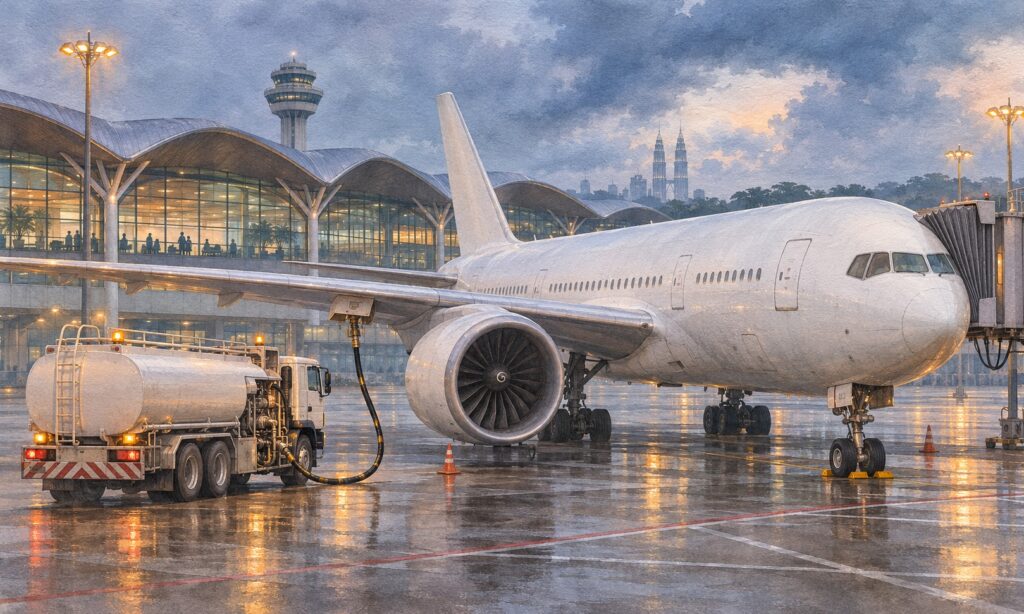
KUALA LUMPUR, Malaysia — The fuel contracts that cushioned some Asia-Pacific airlines from this year’s price surge are expiring, raising the prospect that higher fares could persist into 2027. At an industry meeting on Nov. 13, Wong Hong, director general of the Association of Asia Pacific Airlines, put fuel at about a third of airline operating costs. The International Air Transport Association put the global share at about a quarter last year.
Reuters reported that spot jet fuel had eased to about $148 a barrel from nearly $180 at the end of October, compared with roughly $85 before the war in Iran began. Renewing hedges at current prices would protect airlines against another spike and limit the savings if prices fall. Raising fares carries a different risk. “There has to be a breaking point where passengers will say no,” Wong said.
Malaysia Raises Fares and Weighs Relief
Malaysia Airlines has raised average fares by 20 to 30 percent, recovering only part of the added fuel cost, its chief executive, Nasaruddin A. Bakar, said. The regional association called on governments to help carriers. In Malaysia, former transport minister Anthony Loke told Reuters that the Finance Ministry was weighing support for AirAsia while seeking to protect public funds and preserve domestic air links.
Airlines Are Responding at Different Speeds
Japan Airlines plans its first domestic fuel surcharge in April 2027. Singapore Airlines Group reported record half-year revenue, yet operating profit fell 29 percent as fuel costs rose. In Europe, Lufthansa narrowed its full-year earnings forecast and raised its expected fuel bill to €9.3 billion, even with about 86 percent of its passenger airlines’ 2026 fuel exposure hedged.
Cheaper Crude May Bring Limited Relief
The International Energy Agency said recovering Gulf exports were pushing the oil market back into surplus. Analysts at an aviation energy forum warned that low jet fuel inventories and limited spare refining capacity still left airlines vulnerable to another price spike. Demand is uneven, too. Asia-Pacific passenger numbers edged up in September, while the region’s air cargo demand grew 8.6 percent from a year earlier. For passenger airlines, the question is how far fares can rise before travelers start cutting trips.
Picture: AI Generated